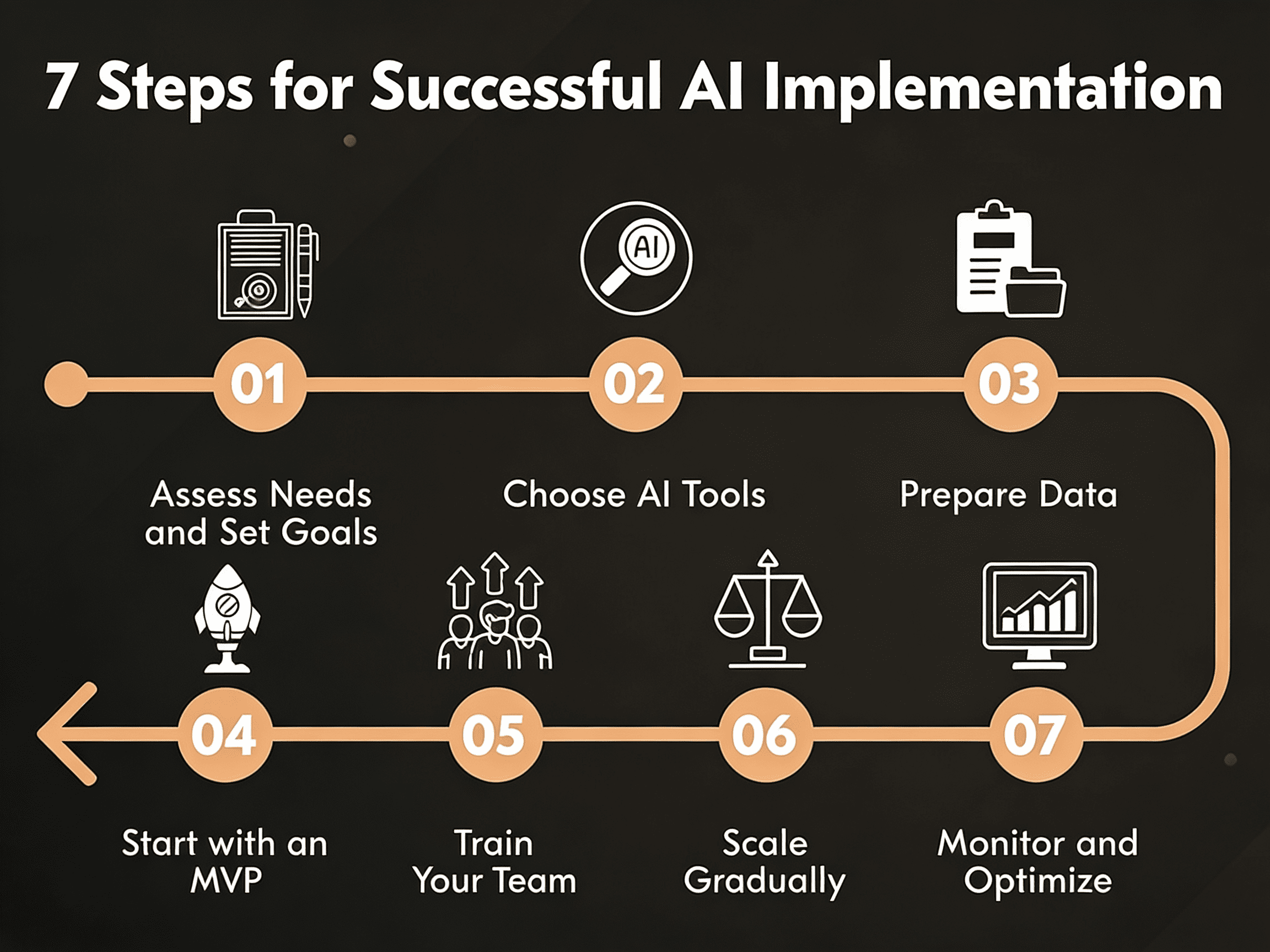
Moonlighting as an AI implementation consultant is one of the most strategic income-protection moves a salaried professional can make in 2026 — because the right way to build optionality in a volatile labor market is not to wait for the layoff. It’s to build a parallel income stream quietly, professionally, and well before you ever need it.
A salaried job that keeps healthcare and benefits intact. A 10-12 hour weekly side practice that operates entirely outside business hours. Productized retainers from premium service businesses. Tool-driven delivery that doesn’t require business-hour availability. A second income stream that compounds quietly while the day job continues funding life. These are the exact operating conditions that make AI implementation moonlighting outperform every other parallel-income vehicle for corporate professionals in 2026.
According to Crunchbase News’ 2026 layoffs tracker, at least 24,332 U.S. tech sector employees were laid off in the weeks ending May 14, 2026 alone. According to Resume.org’s 2026 hiring manager survey, 38% of companies plan to use AI to replace workers this year. According to BLS data, average unemployment duration for white-collar workers over 40 has stretched past 22 weeks in 2026 — the longest sustained level since 2013.
According to McKinsey, 92% of companies have no clear AI strategy and only 3% offer AI implementation services. The conclusion is unavoidable: moonlighting as an AI implementation consultant is the highest-leverage defensive move available to salaried corporate professionals in 2026 — not despite the limited hours, but because the limited hours force the right business model.
This guide walks through exactly how to build a moonlighting AI implementation practice in 2026: the structural reasons salaried employment is an asset (not an obstacle), the tool stack that makes off-hours delivery realistic, the stealth-build 90-day methodology, the verticals that pay premium retainers while tolerating evening-only availability, the moonlighter-specific structural recommendation around employment-agreement discipline, and the honest realities of operating a real business under the radar. Read the whole thing.
Why Salaried Employment Is Disproportionately Valuable for AI Implementation Moonlighting
Let me catalog the structural assets explicitly, because most salaried professionals significantly underestimate what they bring to AI implementation moonlighting — and how much leverage employment itself provides for a parallel practice.
The salary funds the build, eliminates founder desperation. When healthcare, retirement match, and mortgage are covered by the W-2, you can refuse cheap clients, hold premium pricing, walk away from scope-creep, and avoid every panic-driven decision that destroys first-year consulting practices. The salary is the agency’s seed capital.
Corporate context is fresh, active, and competitive. You’re inside an organization watching exactly which workflows are broken, which AI tools are being evaluated, and where implementation efforts fail. That live observational data is invaluable. Most full-time consultants lose this context within 18 months of leaving.
Your professional network is currently dense and warm. Slack still pings. LinkedIn messages still flow. Former colleagues still text you. That network density is highest while you’re in-seat — and it decays the moment you announce a departure. Sign your first clients from this active network before it cools.
You already know how to deliver on deadline to senior executives. AI implementation deliverables — roadmaps, automation builds, voice-agent deployments — require exactly the discipline you’ve already trained. Moonlighters without corporate execution muscle ship inconsistently. You won’t.
You understand corporate buying behavior from the inside. Procurement, IT security review, CFO sign-off for $5K/month line items — you know how this works. That insider knowledge converts directly into faster sales cycles. Generalist AI moonlighters don’t understand corporate buying. Current employees do natively.
You can pilot AI tools at the day job ethically and legitimately. If your employer is running pilots or evaluating vendors, you’re getting paid to learn the exact skills your side practice will sell. The learning curve compresses dramatically when it’s W-2-subsidized.
The current-employee identity creates credibility with skeptical buyers. “I’m a Director of Operations at a Fortune 500 implementing AI workflows for service businesses on the side” sells better than “I’m a full-time AI consultant six months in.” The current-employee identity disarms SMB skepticism.
Time scarcity forces ruthless productization. You can’t afford custom scope on 10-12 hours weekly. You must build productized services with fixed deliverables and fixed prices. The constraint produces the business model that scales.
Moonlighting in a different vertical from your employer keeps the practice ethically clean. Most W-2 agreements permit non-competing, off-hours consulting. You operate in service-business verticals (medical, legal, accounting, dealer) while employed in tech, finance, healthcare administration, or wherever. The vertical separation makes the practice structurally clean.
The overlap is structural. Salaried corporate professionals have already built 85–95% of what AI implementation moonlighting requires. The remaining 5-15% — specific tool fluency, SMB sales conversations, productized scoping, off-hours delivery rhythm — is genuinely learnable in 60-90 days for any reader with the discipline that produced the W-2.
Why Salaried Professionals Face Structural Pressure to Moonlight in 2026
The moonlighting urgency for salaried professionals is real in 2026. Multiple structural shifts make the second income stream timely, not optional:
1. AI-driven internal restructuring is concentrated in your tier. According to Resume.org’s 2026 hiring manager survey, 38% of companies plan to use AI to replace workers in 2026, with cuts concentrated in middle-management and senior-IC roles. The role you have today may not exist in 18 months.
2. Severance has shrunk while reemployment has stretched. 2026 compensation data shows severance for non-executive layoffs has dropped to 8-12 weeks, while BLS data shows reemployment durations of 22+ weeks. Most household emergency funds cover three to four months. The gap is material.
3. Internal salary growth has decoupled from inflation. Per Bloomberg and Wall Street Journal reporting throughout 2025-2026, internal raises have averaged 3-4% while housing, healthcare, and education inflation has run materially higher. The W-2 alone is no longer keeping pace.
4. SMB demand for AI implementation continues exploding. According to the U.S. Small Business Administration, there are 36 million small businesses across America. According to the Federal Reserve’s research on small business AI adoption, operational integration is the #1 cited barrier — exactly what moonlighting implementation consultants solve.
5. Stigma around moonlighting has collapsed. Per labor reporting throughout 2025-2026, surveys consistently show 35-45% of salaried professionals now operate side income streams, with employer tolerance materially higher than five years ago. Moonlighting is normalized — making the social cost of starting roughly zero.
The implication: moonlighting as an AI implementation consultant is no longer reputationally risky or socially unusual. It’s defensive, common, and structurally aligned with where the labor market is going. The professionals who don’t moonlight are increasingly the outliers.
The Lean Wedge AI Tool Stack for Moonlighting Implementation Consultants
The AI tool stack that maps most directly onto moonlighting emphasizes automation, asynchronous workflow, and minimum-touch delivery — the specific tools where 10-12 weekly hours produce premium-retainer outcomes. The lean wedge stack:
Synthflow AI — voice AI agents. The highest-leverage moonlighting tool because deployed voice agents run 24/7 without consultant time. Build once Saturday morning, collect retainer monthly. The closest thing to passive moonlighting income that exists in 2026.
Calliope AI — content generation. Drafts client content at speed that makes content retainers profitable in 2-3 hours of evening work per client. The easiest first-product to sell during the moonlighting startup phase.
Apollo AI — outbound sequence automation. Runs your own client acquisition outbound during business hours while you’re at the day job. Pipeline keeps building during business hours even though you can’t take meetings until 6pm.
Clay AI (after first paying client) — data enrichment. Powers targeted outbound. Add in month two or three once cash flow supports it.
Combined monthly cost for the lean wedge stack: $400-$650 to start, scaling to $700-$900 with Clay. As the moonlighting practice scales past three clients, layer in the broader stack: Victoria AI for lead generation at scale, Helios AI for alternative voice orchestration, Ella AI for proposal generation, Aura AI for pipeline forecasting, Lindy AI for workflow automation, Gamma AI for sales presentation generation, and n8n for workflow orchestration backbone. The full 12-tool universe gets deployed only when revenue justifies it.
The lean wedge stack is deliberately undersized. Minimum monthly cost necessary to deliver one productized service to two or three clients well, while the day job continues funding life. Expand as revenue expands.
The 90-Day Stealth Moonlighting Build Sprint
Salaried moonlighters execute the 90-day AI implementation build meaningfully better than full-time pivots because runway pressure is removed — you’re building a parallel system, not racing a cash balance. Here’s the moonlighter-optimized 90-day playbook, designed for 10-12 weekly hours outside the day job.
Days 1-14: Stack subscription, skill installation, and employment-agreement review. Read your employment agreement thoroughly before anything else. Confirm moonlighting in a non-competing vertical is permitted. Subscribe to Synthflow, Calliope, and Apollo. Spend two Saturday mornings building proof-of-concept agents and workflows.
Days 15-35: Productize and brand. Choose one specific deliverable. Define scope, deliverables, flat-rate price ($2,500-$4,500/month). Build the one-page service description and one-page agreement. Stand up a minimal practice website using your personal name or a neutral consulting brand — not anything that could be confused with your employer.
Days 36-55: Network outreach and discovery (carefully). Reactivate the dormant network — but only in non-competing verticals and only on personal devices and personal email. Send 50-100 personalized outreach messages. Take discovery calls 6pm or Saturday mornings.
Days 56-75: Close first 1-2 clients and deliver. First clients sign at floor pricing. Deliver impeccably. Document the process. Capture case studies. This is the inflection point — first deliveries shift conviction permanently.
Days 76-90: Refine and raise prices. Tighten scope based on first deliveries. Raise prices 20-40% for client #3. Layer in Clay. Day 90 typically lands the moonlighter at $5K-$10K in monthly recurring revenue on 10-12 weekly hours, with the W-2 still fully intact.
The structural advantage of the moonlighting 90-day sprint: there’s no income pressure to skip the employment-agreement review or undersell first clients. The salary pays the bills. The practice gets built right.
The Best Verticals for Moonlighting Implementation Consultants
Tier A — Premium pricing tolerates evening-only availability
Specialty medical (med spas, dermatology, fertility, plastic surgery) — physician-operators with no time for vendor evaluation, evening-call-friendly. Retainers $3,000-$6,500/month.
Wealth management & RIAs — relationship-driven, high client LTV, evening-call-friendly buyers. Retainers $3,500-$7,000/month.
Law firms (25-150 attorneys) — high revenue per client, intake-heavy workflows, partners available evenings. Retainers $4,000-$8,000/month.
Accounting firms (50-250 professionals) — recurring economics, document-heavy workflows, evening-call-friendly. Retainers $3,500-$7,500/month.
Auto dealer groups (multi-rooftop) — high call volume, Saturday-morning evaluation friendly. Retainers $5,000-$12,000/month.
Insurance agencies (commercial, multi-office) — call-heavy intake, strong retention economics. Retainers $3,000-$6,000/month.
Tier B — Mid-tier ($2K-$3.5K/month single-location)
Dental and orthodontic practices, chiropractic and PT clinics, veterinary clinics, real estate brokerages, restaurant groups, HVAC and home services.
Tier C — High-volume / underserved ($1.2K-$2.5K/month single-location)
Salons and barbershops, boutique fitness studios, IV therapy and wellness clinics, auto repair shops, single-location restaurants.
The moonlighter vertical strategy: pursue Tier A in verticals completely separate from your employer’s. Vertical separation is the structural protection. Pick verticals where the differentiator produces meaningful pricing power and where your employer has zero stake.
Why Moonlighters Must Treat Employment-Agreement Compliance as Non-Negotiable
The moonlighter-specific structural recommendation: treat the employment agreement as immutable, not as a guideline. The reasoning is structural — moonlighters who violate non-compete clauses lose both the day job and the side practice in a single termination event.
- Read the employment agreement in full before client one
- Confirm moonlighting in non-competing verticals is permitted (it almost always is)
- Confirm moonlighting outside business hours is permitted (it almost always is)
- Use personal devices, personal email, personal phone for all moonlighting activity
- Never moonlight in the same vertical as your employer
- Never use employer IP, employer customer lists, or employer trade secrets for the side practice
- Never solicit employer clients or employees for the side practice
- Document the separation clearly so that any future review is straightforward
The structural irony for moonlighters is significant — clean separation is what makes the moonlighting practice safe, durable, and defensible. The moonlighters who cut corners on this are the ones who get terminated. The ones who treat compliance as non-negotiable operate moonlighting practices indefinitely without incident.
I graduated from Vanderbilt. Almost went straight into investment banking. I spent years at Vanderbilt University reading the same labor reports and McKinsey decks that documented the trends now defining 2026 — and I came away with one inescapable conclusion: a salary has a ceiling. Inflation doesn’t.
I decided not to try and outrun inflation with a salary. I replaced my corporate salary by implementing pre-built AI tools we leverage — Synthflow, Calliope, and Apollo as the lean wedge plus the broader implementation stack — for service businesses with operational gaps they can’t fix on their own.
What Most Articles Won’t Tell You About Moonlighting as an AI Implementation Consultant
A few honest realities specific to the moonlighting transition:
Employment-agreement compliance is the difference between safe and reckless moonlighting. Read the agreement. Confirm in writing if anything is unclear. Never assume permission. Compliance discipline is the single most important moonlighting skill.
Vertical separation from your employer matters more than tool stack. Moonlight in medical, legal, accounting, or dealer verticals — whichever is furthest from what your employer does. Same-vertical moonlighting almost always violates the agreement.
Use personal devices, personal email, personal phone for everything. No employer laptop. No corporate email. No corporate Slack. No work-issued phone. The separation is total — and the separation is what makes the practice defensible.
Most employers are aware salaried employees moonlight. Most don’t care, provided three conditions hold. First, the moonlighting is in a non-competing vertical. Second, it happens outside business hours. Third, it doesn’t affect day-job performance. Hold those three, and employer tolerance is structurally high.
Three clients is the realistic ceiling at the moonlighting stage. Beyond three productized clients at 4 weekly hours each, total side load exceeds 12-15 hours, which compounds with a 45-50 hour day job and breaks. Three clients at $4K average is $12K monthly. That’s the right ceiling to plan around.
Your first client always comes from network, not outbound. Outbound builds the pipeline that produces clients five through ten. The first comes from a former colleague or friend who runs a business. Don’t over-engineer outbound before working the network you already have.
The day job feels different around month four. Once $8K-$12K in monthly moonlighting revenue is flowing, the relationship to the W-2 shifts permanently. The job stops being “the only income” and starts being “one income stream.” That shift alone is worth building for.
Stealth doesn’t mean dishonest — it means professional. You don’t broadcast the moonlighting practice at the day job. You don’t lie about it either. If asked directly, you answer honestly that you do permitted off-hours consulting in a non-competing field. Professional discretion, not secrecy.
The model is designed to last, not to escape. Many moonlighters never quit. Permanent dual-income at $10K-$18K monthly side revenue is a legitimate outcome. Build the practice first. Decide what to do with it later.
Spousal alignment matters more than tool stack. If your partner or family is not aligned with the time investment, the practice will not survive month six. Have the conversation explicitly before starting.
According to McKinsey, 92% of companies have no clear AI strategy and only 3% offer AI implementation services. The salaried professionals successfully moonlighting as AI implementation consultants in 2026 are not the ones who took shortcuts on compliance or stealth. They’re the ones who recognized that disciplined separation produces durable parallel income — and executed methodically through a compliant, productized, lean-wedge framework.
Begin the Stealth Build This Saturday Morning
The action sequence for moonlighting as an AI implementation consultant:
This week: Read the employment agreement in full. Confirm permitted moonlighting parameters. Choose a non-competing vertical. Have the spousal alignment conversation.
Weeks 1-2: Subscribe to the lean wedge stack — Synthflow, Calliope, Apollo — at $400-$650 monthly cost on personal payment methods. Build two practice agents over the first two Saturday mornings using personal devices only.
Weeks 3-5: Productize one offering. Build the one-page service description and one-page agreement. Define the price ($2,500-$4,500/month). Stand up a neutral practice website.
Weeks 6-8: Reactivate the network in non-competing verticals only. Send 50-100 personalized outreach messages on personal email. Take 8-12 discovery calls at 6pm or Saturday mornings.
Weeks 9-11: Close the first 1-2 clients at floor pricing. Deliver impeccably during evening and Saturday hours. Document case studies. Layer in Clay AI.
Weeks 12-13: Raise prices 20-40% for client #3. Lock in $5K-$10K in monthly moonlighting revenue while still fully employed.
Months 4-9: Scale to three productized clients on 12-15 weekly hours. Monthly moonlighting revenue lands at $10K-$15K. Begin building delivery SOPs for eventual delegation.
Months 10-18: Hire one part-time VA on personal payment methods. Moonlighting revenue scales to $15K-$22K on the same weekly time. Track whether revenue has exceeded W-2 income for three consecutive months.
Months 19-36: Decision point. Either continue dual-income moonlighting permanently (now scaled to $20K-$35K monthly), or transition to full-time with 6-12 months of cash runway saved and a proven client roster.
The salaried professionals successfully moonlighting as AI implementation consultants in 2026 are not the ones who took the obvious risks. They’re the ones who recognized that disciplined compliance, vertical separation, and personal-device discipline produce durable parallel income — and executed methodically through a stealth-build, productized, lean-wedge framework.
Read the employment agreement. Choose the non-competing vertical. Subscribe to the lean wedge stack. Begin the stealth build today.
Pick the industry. Take the first step. If you want to see the playbook fully in action – tap here to start.